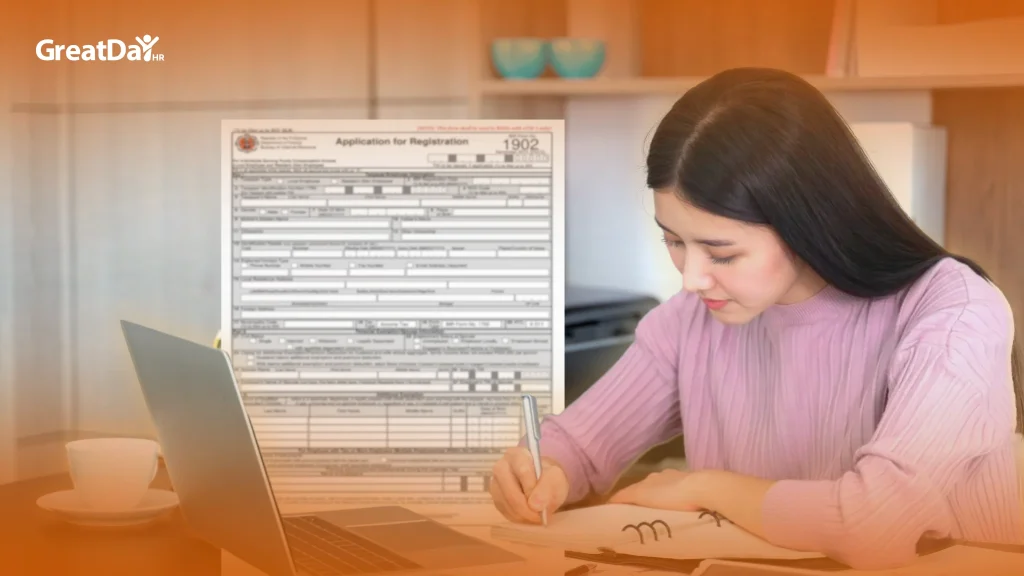
A Taxpayer Identification Number (TIN) is a permanent number issued by the Bureau of Internal Revenue (BIR) to individuals and organizations for tax tracking and compliance. In the employment process, this number ensures that an employee’s tax withholdings and contributions are properly recorded under their name.
Employers in the Philippines are legally required to withhold and remit taxes for employees with valid TINs. Without one, salary processing, tax filings, and payroll compliance can be delayed or penalized.
Who Needs a TIN for Employment
Any Filipino individual starting employment — whether in government or the private sector — must have a TIN. Here’s who needs to secure one:
- New employees without a TIN (the employer usually assists in filing BIR Form 1902).
- Existing taxpayers simply submit their existing TIN to their new employer.
- Job seekers or first-time workers under Executive Order No. 98 can also apply for a TIN even before employment.
Freelancers or self-employed individuals must apply using BIR Form 1901 to ensure proper income tax reporting.
Who Needs a TIN for Employment
Any Filipino individual starting employment — whether in government or the private sector — must have a TIN. Here’s who needs to secure one:
- New employees without a TIN (the employer usually assists in filing BIR Form 1902).
- Existing taxpayers simply submit their existing TIN to their new employer.
- Job seekers or first-time workers under Executive Order No. 98 can also apply for a TIN even before employment.
Freelancers or self-employed individuals must apply using BIR Form 1901 to ensure proper income tax reporting.
TIN ID Application Requirements
Below are the standard requirements when applying for a TIN for employment purposes:
| Requirement | Details |
| BIR Form 1902 | For individuals earning purely compensation income. |
| Valid Government ID | Any of the following: National ID, UMID, Passport, Driver’s License, or Postal ID. |
| Birth Certificate (PSA-issued) | Proof of identity and birth details. |
| 1×1 or 2×2 Photo | Required for the physical TIN ID card. |
| Certificate of Employment | To verify your employer’s BIR registration. |
| Marriage Certificate (if applicable) | For married women updating surname. |
| Proof of Address | Utility bill or barangay certificate for RDO jurisdiction verification. |
If you already have a TIN and need to update your details (address, name, or RDO transfer), you can use BIR Form 1905 to process changes.
Step-by-Step Process to Get a TIN ID for Employment
Step 1: Complete the Correct BIR Form
- Form 1902 – for employees.
- Form 1901 – for self-employed or mixed-income earners.
- Form 1904 – for one-time taxpayers or those under Executive Order 98.
Step 2: Submit Your Documents to the Proper RDO
Submit all requirements to the Revenue District Office (RDO) where your employer or place of residence is registered.
Step 3: Wait for Your TIN or TIN ID Release
Depending on your RDO’s process, you may receive your TIN number and printed ID on the same day or after a few business days.
Step 4: Submit Your TIN to Your Employer
Once you receive your TIN, provide it to your HR department to ensure proper tax deduction and reporting.
Step 5: Update or Replace When Needed
Lost your TIN card? Changed jobs or moved cities? File Form 1905 for updates or replacements.
Applying for TIN ID Online
The BIR’s Online Registration and Update System (ORUS) now allows users to apply and update their TIN data digitally.
Steps to apply online:
- Visit orus.bir.gov.ph.
- Create an account and fill out the online registration form.
- Upload your valid ID and supporting documents.
- Wait for email confirmation or schedule for pickup.
You can also generate a digital TIN ID, which serves as an official identification valid for most transactions.
Common Problems and How to Avoid Them
- Submitting incomplete requirements leads to application rejection.
- Registering in the wrong RDO causes delays.
- Failure to update old TIN data can lead to mismatched payroll records.
- Duplicate TIN registrations are prohibited — only one TIN is allowed per individual.
To avoid these issues, double-check all documents and coordinate with your HR or employer before submission.
Why TIN Registration Matters to Employers
For companies, collecting and validating TINs ensures compliance with BIR Revenue Regulations. Incorrect TINs can affect tax filing, employee reporting, and payroll accuracy.
That’s why it’s essential for HR teams to maintain an efficient system that manages employee data — from TIN collection to payroll computation.
Streamline Your Payroll and HR Compliance with GreatDay HR
Managing employee tax details, payroll, and compliance doesn’t have to be complicated. With GreatDay HR, your organization can automate and simplify HR and payroll processes seamlessly.
Through GreatDay HR’s Managed Payroll Service, you can:
- Automate employee TIN and tax information collection.
- Ensure accurate withholding and BIR compliance.
- Generate and submit tax-related reports effortlessly.
- Integrate HR, timekeeping, and payroll into one platform.
Stay compliant and stress-free with GreatDay HR — the trusted partner for smarter and more efficient payroll and HR management in the Philippines.